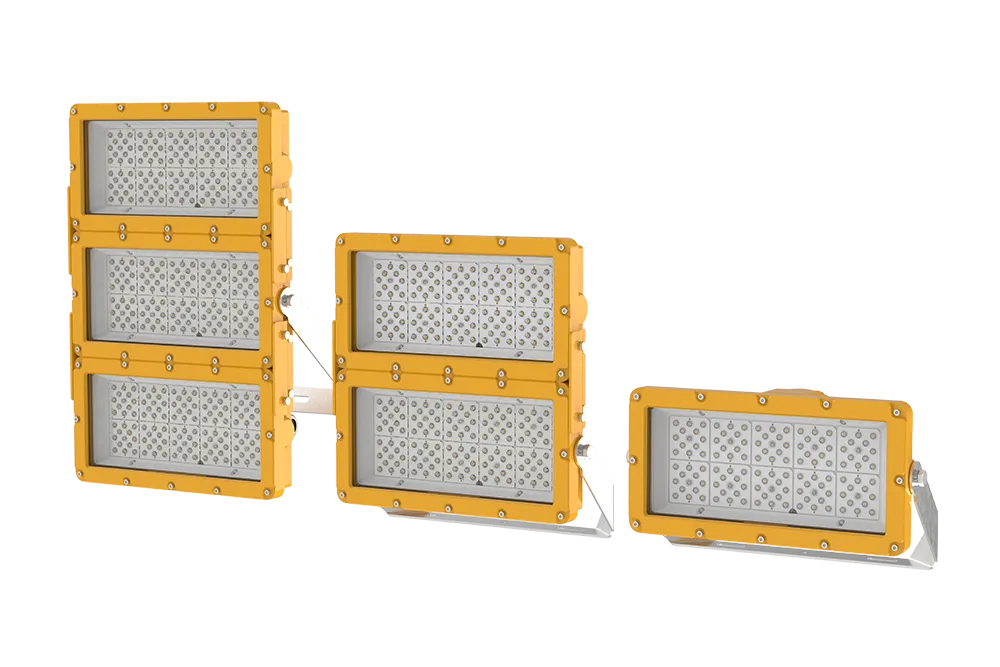
Initiating the treatise reviews an methods involving fire-resistant sources throughout operational sites.
Functioning cautiously through dangerous regions including processing sites requires designed tools intended to eliminate anticipated hazards. Hazloc light sources are vital aspects in these zones, engineered to survive sparks, explosive mists, and volatile regions. The aforementioned machines are never inherently harmless; instead they are crafted to encapsulate any contained ignition or flare-up and stop it from initiating a augmented blast in the proximate zone. This manual delivers significant information about explosion-proof luminaires, their employments, and mitigation aspects for deploying them effectively.
Learning Explosion Proof Lighting Standards
Managing specific detonative lighting guidelines can be complex, especially in markets involving hazardous spaces. These rules – often stemming from regional bodies for instance the National Electrical Council (NEC), ATEX (Europe), and IEC – enforce rigorous design and setup methods to prevent the chance of combustion from non-explosive machinery. Understanding stipulated standards is decisive for ensuring team safety and compliance with legal mandates.
Light Emitting Diode Spark Proof Lighting Devices: Quality & Guarding
LED explosion proof lights represent a significant development over previously used arc fixtures in settings where explosive chemicals are available. These sturdy tools also provide exceptional power savings, resulting in declined expenditure, but specifically maintain a improved standard of defense by stopping the possibility of explosions caused by energy flare-ups}.
Explosion Proofed Risky Site Critical Proof Fire Burn Spark Resistant} Units : A Extensive Examination
Ex Toxic Area Dangerous Proof} Devices are particularly designed lighting applications built to perform safely within potentially inflammable areas. These resilient fixtures inhibit sparks, temperature and voltage bursts from igniting a significant explosion. They usually incorporate tailored designs, comprising such as airtight housings and inherently safe energy elements to preserve safety requirements in operations like fuel & chemical gases processing, processing plants, resource recovery operations, and biomedical production.
Appointing the Suitable Spark-Proof Fixtures for Unsafe Areas
Evaluating the best fire-safe lighting for a defined hazardous area calls for comprehensive evaluation. Components such as the label (e.g., Category I, II, or III and sectors 0) need to be exactly verified to guarantee alignment with corresponding security guidelines. Over and above the location’s natural menaces, consider atmospheric situations, consisting of temperature and dampness, to determine a resilient and safe answer. Consistently engage a expert expert to assist your choice.
Zones Where Apply Explosion Proof Lights?
Explosion-proof otherwise named intrinsically safe|hazardous location|Class-rated} lights are strictly needed in specific areas where inflammable aerosols or microparticles could may create a toxic atmosphere. This generally includes industrial processing plants, paint application areas, flour handling facilities, and sewage treatment areas. Regulations, such as those from OSHA and NFPA, require their use in these sites to mitigate the risk of fire and maintain safety performance.
Perks of Solid-State Lighting in Hazardous Location Illumination
Transitioning to Light Emitting Diode technology for intrinsically safe lighting offers a meaningful plethora of upsides. First, crystal lights boast a considerably longer service life compared to traditional filament lights, reducing maintenance disbursements and cessations. They are also essentially safer, producing diminished thermal energy which minimizes the exposure of fire outbreaks in risky atmospheres. In addition, LEDs are notably energy saving, leading to minimized power expenditures and a shrunk green impact. Finally, the tough make of Solid-State Lighting fixtures sustains the demanding conditions typical of ignition-resistant areas.
- Prolonged Lifespan
- Lessened Servicing Disbursements
- Boosted Security
- Diminished Electricity Expense
- Boosted Durability
Controlling and Examining Explosion Proof Lighting Systems
Systematic servicing and careful review of spark proof lighting configurations are absolutely necessary for ensuring hazard control and preventing potential perils. This includes a timely review of all items, such as lighting devices, passages, conductors, and coupled connection boxes. Particularly, check for deterioration, body damage, and sufficient ground connection. Moreover, verify that complete markings are decipherable and that the illumination devices complies with official requirements.
- Conduct observable reviews.
- Review wire terminations.
- Authenticate spark protection.
The Future of Explosion Proof Lighting Technology
Developing landscape of explosion-proof devices technology signals a distinct shift from traditional designs. Future applications will increasingly incorporate connected capabilities, enabling virtual monitoring, diagnostics, and responsive control. We imagine a widening adoption of semiconductor technology, not only for its primary energy efficiency, but also its ability to facilitate embedded sensors for monitoring unsafe conditions. Also, materials analysis is promoting innovations in strong container materials, allowing for slimmer and advanced designs, while upholding the compulsory levels of defense.
- Boosted battery life for movable applications.
- Unification with anticipative maintenance infrastructures.
- Invention of hands-free lens techniques.